
What the quality inspection will focus on in 2026
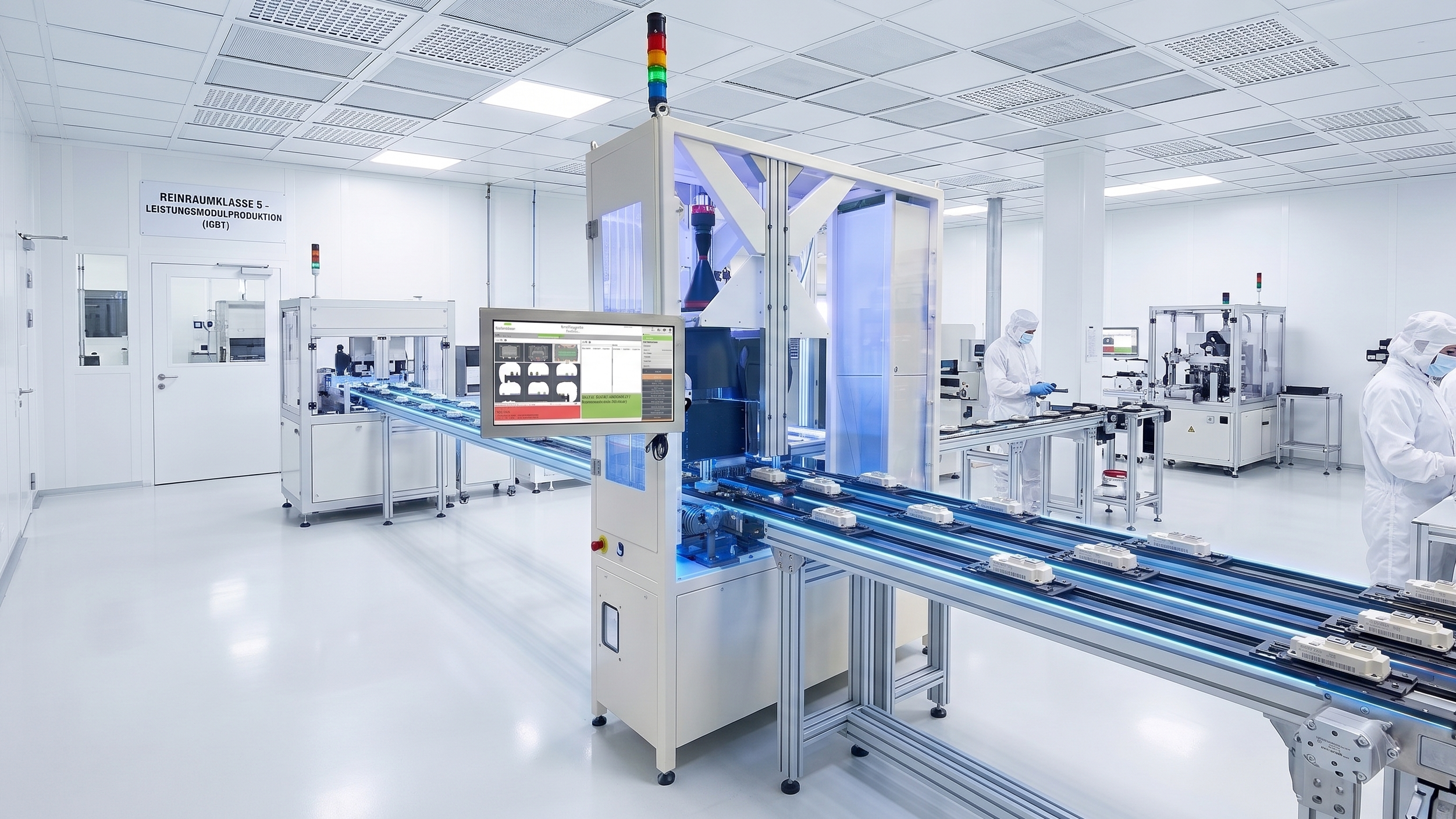
At the start of the year, the most important point to note is this: the fundamental questions of optical inspection do not change annually. A feature must be imageable, the detection must be reproducible, and the whole thing must fit into the production line. What will shift for quality assurance in 2026 are the surrounding requirements. Three of these are currently particularly common.
Quality assurance 2026: Traceability moves from batch to part
The proof that a batch has been tested is losing its significance. What is increasingly required is the allocation to the individual part: Which measurements were recorded on this specific component, by which system, with which settings, and at what time?.
This has two consequences for testing technology. First, each part must be uniquely identifiable – meaning the quality of the marking itself becomes a test criterion. Second, the test data must be stored in a structured manner and be retrievable for years. The system then becomes not just a sorting device, but a data source.
Manual visual inspection is becoming increasingly difficult to staff
The point we hear most often in discussions is rarely technical in nature. Positions in manual visual inspection can no longer be reliably filled, and where they can be, staff turnover is high. Experienced inspectors are difficult to replace because a significant part of their performance is based on undocumented experience.
This shifts the rationale for automation. It is no longer primarily driven by the need for greater accuracy in a machine, but rather by a simple lack of capacity. This also changes the cost-benefit analysis: the comparison is no longer made with a functioning manual inspection, but with one that no longer exists.
Deep Learning is leaving the feasibility phase
Machine learning methods have been available in image processing for years. What is currently changing is their status: they are moving from the testing phase to systems that are in series production and must undergo acceptance testing. This makes relevant questions that played no role in the feasibility phase – how a trained model is versioned, how a decision remains traceable, what happens with a new component variant, and who bears the responsibility when the model is retrained.
Our stance on this remains unchanged: Machine learning belongs where the desired outcome cannot be defined by rules – typically in the case of anomalies on variable surfaces. Measurement, location, presence, and codes will continue to be checked using rule-based and therefore deterministic methods. Learn more under AI Vision and Deep Learning.
A good start
What this means for investment decisions
All three developments are shifting the same point: the time at which a testing system becomes cost-effective. Previously, a specific quality problem usually triggered the investment. Increasingly, structural reasons are the driving force – a documentation requirement that will come into play during the next audit, or a position in visual inspection that has been vacant for months.
In practical terms, this means that feasibility should be clarified earlier than was previously common practice. Depending on the scope of the project, several months can pass between the decision to commission a testing facility and its operational phase. Those who only begin to clarify the feasibility once the requirement is already binding will find themselves under time pressure – and time pressure is the most expensive factor when it comes to custom-built facilities.
In contrast, a feasibility study costs little and is useful regardless: it provides a reliable statement that can be used for internal planning, even if the investment is not due until the following year.
For quality assurance in 2026, this means one thing above all: the technical clarification should be decoupled from the budget decision. Negotiating both simultaneously takes time, which is regularly lacking at the end of the project.
We wish you a happy and successful 2026. If you have a testing task on your list that you're unsure can be solved visually, send us sample parts. Their response is the best first step. Contact us.
Further sources: Market figures and industry forecasts for image processing are published by the VDMA Industrial Image Processing; European developments and standardization projects are monitored by the European Machine Vision Association.