Optical shape measurement

Roughness, shape, and topography.
In one scan.

Roughness, cylindrical shape and surface topography of rotationally symmetrical precision parts — non-contact via white light interferometry, with 100 nm accuracy, in a single measurement run.

Ø from 0.5 mm
Inner diameter
100 nm
accuracy
1 scan
Shape · Roughness · Defects
under 2 minutes
Cycle time
The challenge

All critical dimensions — even in bores from 0.5 mm.

Roughness, shape, and topography of small precision parts are currently usually captured using separate systems. This requires multiple setups; internal geometries below 1 mm are very difficult to access by touch alone.

If that applies to you
  • Tactile systems are too slow for you.
  • You cannot access internal geometries smaller than 1 mm.
  • Today, you need several measuring devices for one task.
  • Their optical surfaces are too sensitive to be touched.
Challenge · 01

Tactile measurement

Probing systems capture the surface point by point or line by line. Collecting full-surface shape and roughness data for a precision part requires correspondingly long measurement times per component.

Our approach:The WLI optics capture the surface without contact in one pass — 30 s to 2 min per component.
Challenge · 02

Access to internal geometries

Inner diameters below 1 mm are difficult to access for probes and many optical processes — even though they contain functionally crucial dimensions, e.g., of lens mounts and micro-bores.

Our approach:Non-contact WLI measurement with access to inner diameters from 0.5 mm.
Challenge · 03

Separate measuring systems

Capturing roughness, shape, and topography on separate devices means multiple setups. Each change introduces a new reference point and makes it more difficult to compare the results.

Our approachgenerates shape, roughness, and defects from a single data set — without re-capturing.
Challenge · 04

Sensitive surfaces

Optical functional surfaces must not be touched. Touch measurements carry the risk of scratches and marks on surfaces that must remain pristine.

Our approach:Non-contact measurement — no contact with the functional surface.
The procedure

Shape, roughness and defects in a non-contact measurement run.

White light interferometry captures rotationally symmetrical precision parts across their entire surface and delivers in a single pass the measured quantities that are otherwise distributed across separate systems.

Feature / 01

All measurements in one scan

Roughness (Ra, Rz, Sa), cylindrical shape and roundness, surface topography and defects — in a single measurement run, without re-clamping.

Feature / 02

Internal geometry from 0.5 mm

Access to internal diameters from 0.5 mm — an area inaccessible to tactile systems and coordinate measuring machines.

Feature / 03

Full-surface 3D topography

No single line, no sample profile: the entire area is captured — shape, waviness and local defects in the same data set.

FEATURE / 04

Turnkey testing solutions

Based on white light interferometry, developed in Aachen. Service and support from a single source — from measurement concept to operational system.

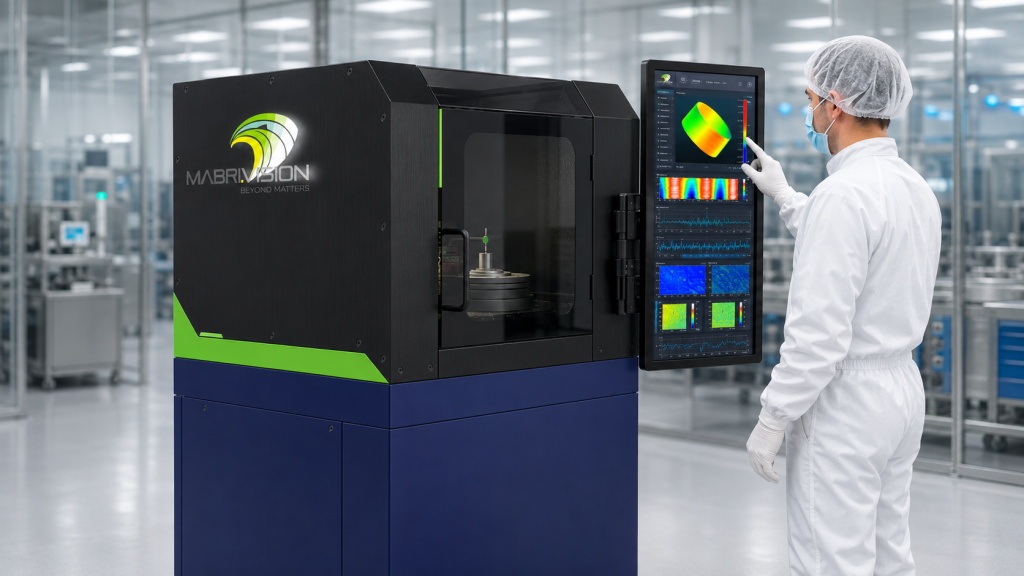
Serial testing

In use during measurements.

We measure rotationally symmetrical precision parts with internal geometries from 0.5 mm — shape, roughness and defects contactlessly in a scan, with documented proof for each part.

100 nm
accuracy
Ø from 0.5 mm
Inner diameter
Shape · Roughness · Defects
In a scan
30 s – 2 min
Each component
Measurement examples

Evaluations based on real measurements.

Three example evaluations — shape deviation, defect analysis, and internal surface inspection. The components are intentionally anonymized.
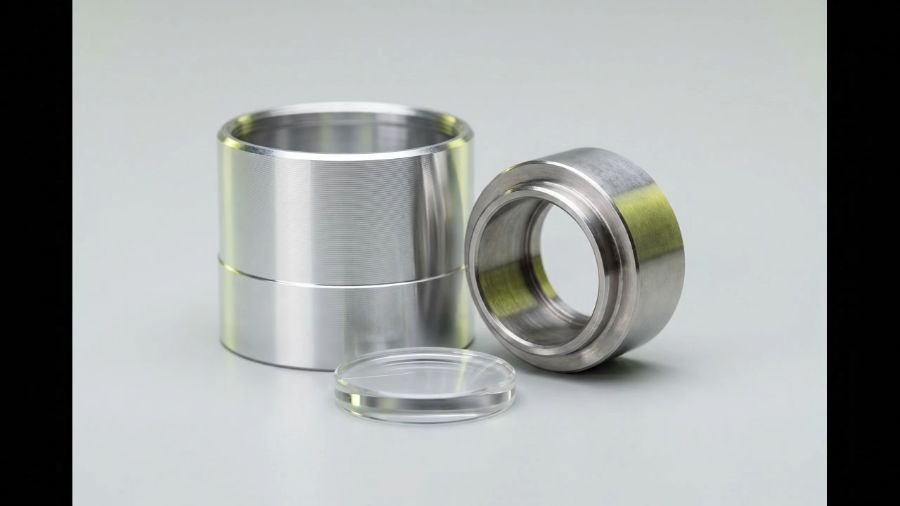
Tested precision parts, rotated by scroll
WLI · full surface

Shape deviation, shown unfolded.

The cylindrical shape is unfolded and applied against the target geometry — deviations across the entire surface become visible at a glance, not just along individual lines.

Measured variable
Cylindrical shape / roundness
accuracy
from 100 nm
recording
full surface
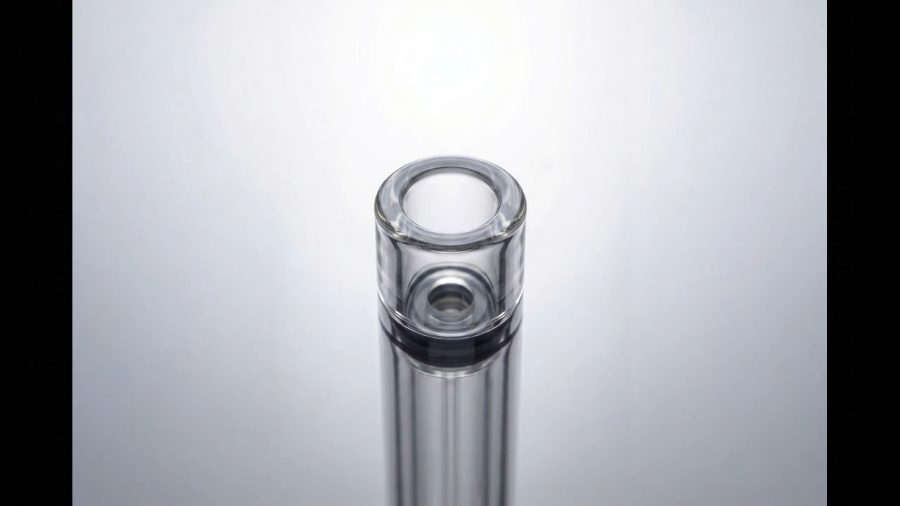
Tested transparent precision part with internal geometry, rotated via scroll
Defect & Profile Analysis

Micro-defects in the elevation profile.

Local defects are located in the same data set and quantified in the elevation profile — separately from the overall shape, without a second measurement.

Measured variable
Defects / Topography
resolution
from 20 nm
principle
contactless
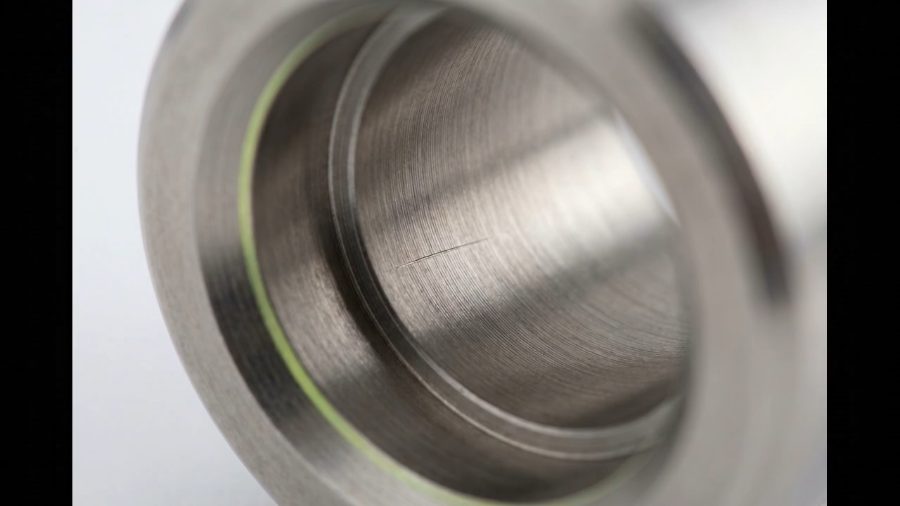
View into the micro-bore of a tested precision part, rotated via scroll
Interior surface inspection

Scratches on the inner surface.

Even in internal geometries from 0.5 mm upwards, scratches and structures on the surface are detected — where tactile methods have no access.

Measured variable
Surface defects
Inner diameter
from 0.5 mm
roughness
Ra · Rz · Sa
In comparison

What previously required several systems can now be captured in a single WLI measurement run.

Tactile systems

  • Point-by-point probing — slowly for each part
  • Challenging access to internal geometries below 1 mm
  • Touching sensitive optical surfaces

Coordinate measuring machines

  • Form, but roughness not integrated
  • Individual setup for each measured quantity
  • Interior access is limited at small diameters

MABRI · WLI

  • Shape, roughness and defects in one scan
  • Internal geometries accessible from 0.5 mm
  • Non-contact — in 30 seconds to 2 minutes
REFERENCES

AR / Smart Glasses
CA · US

EUV Semiconductors
NL

Tier-1 Automotive
Munich · DE

MedTech Implants
Boston, MA

Diagnostic chips
Hilden · DE

Drug Delivery
Massachusetts · US

MV.BRIX — modular platform

Configure instead of developing from scratch

Our MV.BRIX platform consists of proven hardware and software modules — automation, vision, software, inspection. We configure your customized system from these building blocks. Reduced risk. Shorter delivery times. Lower total cost of ownership.

  • Scalable · maintainable · future-proof
  • 100% perfectly tailored to your requirements
  • Time to first measurement 4-8 months
Industries

Medical technology and optics are the focus.

The focus is on rotationally symmetrical precision parts whose function depends on microstructures on internal and functional surfaces.

Medical technology

Precise internal geometries

Microbores and cylindrical functional surfaces, whose shape, roughness and freedom from defects determine the function — tested without contact and across the entire surface.

optics

Lenses & Lens Frames

Sensitive optical functional surfaces and mounts that must be measured without touch — shape, topography and surface quality in one data set.

Also suitable for cylindrical precision parts in precision engineering, automotive and aerospace.
Inquire now

Request a feasibility study - free of charge.

30 minutes online, starting with a concrete component description. Together we'll determine whether a vision-driven cell is suitable for your application — objectively, without sales pressure.