The challenge

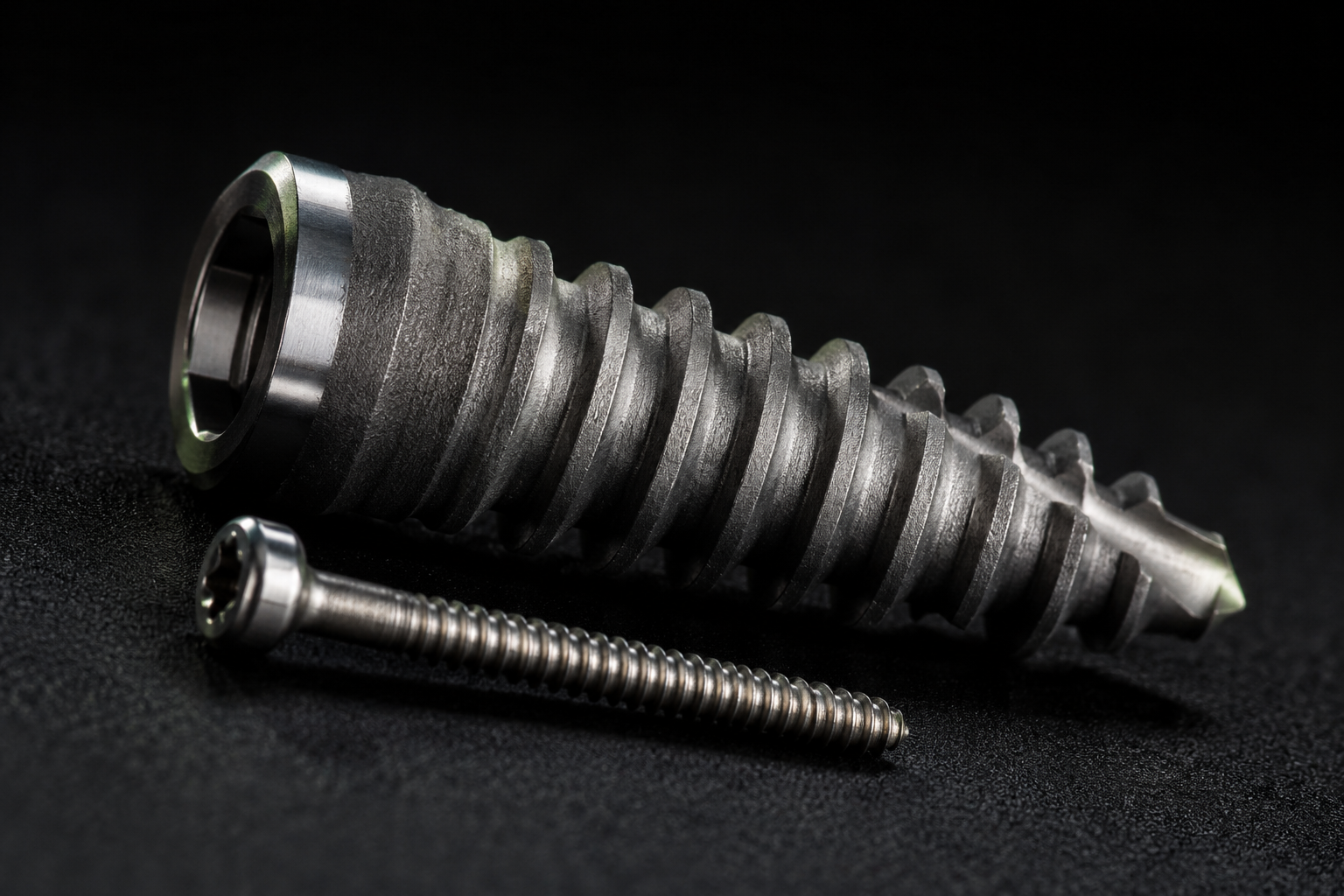
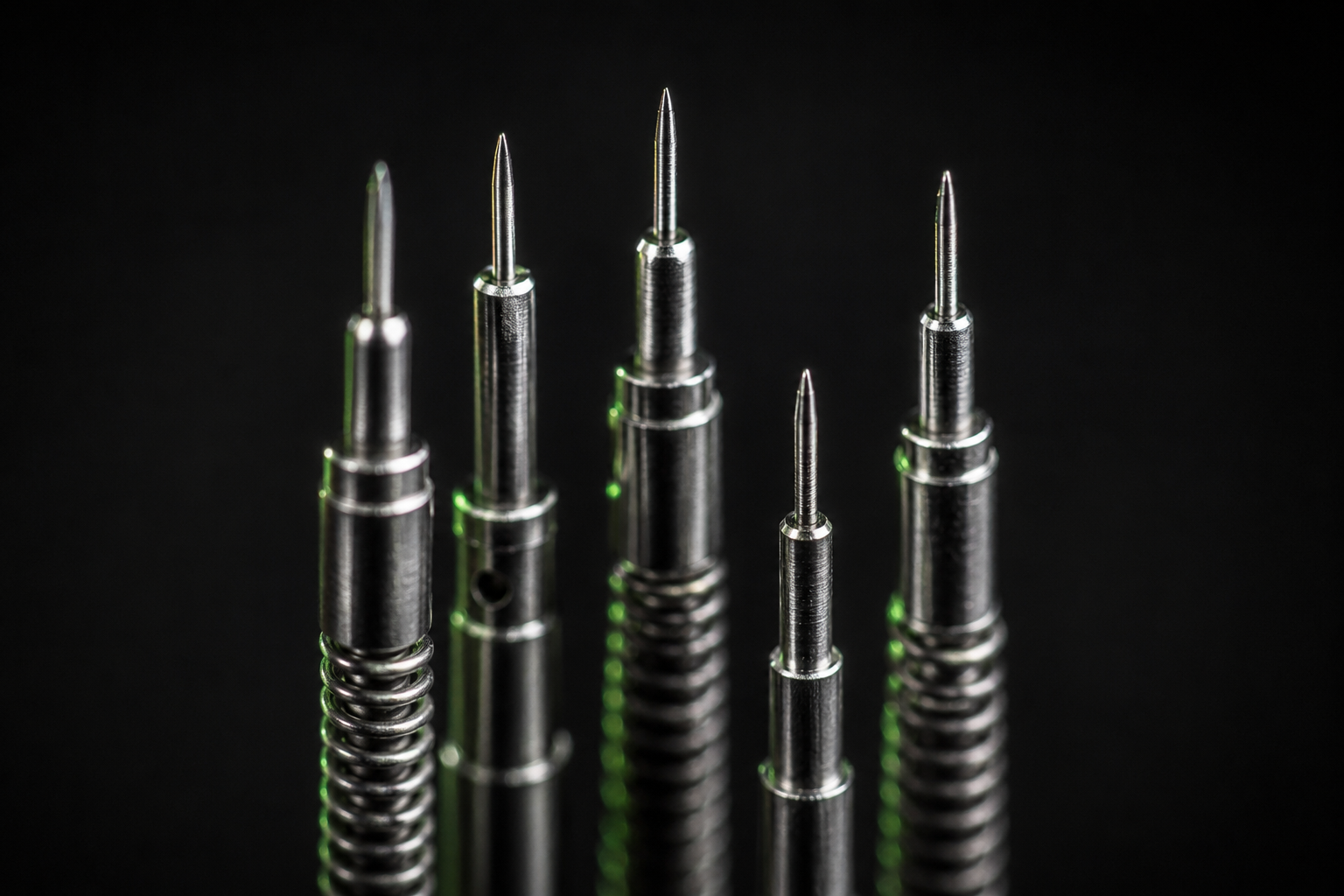
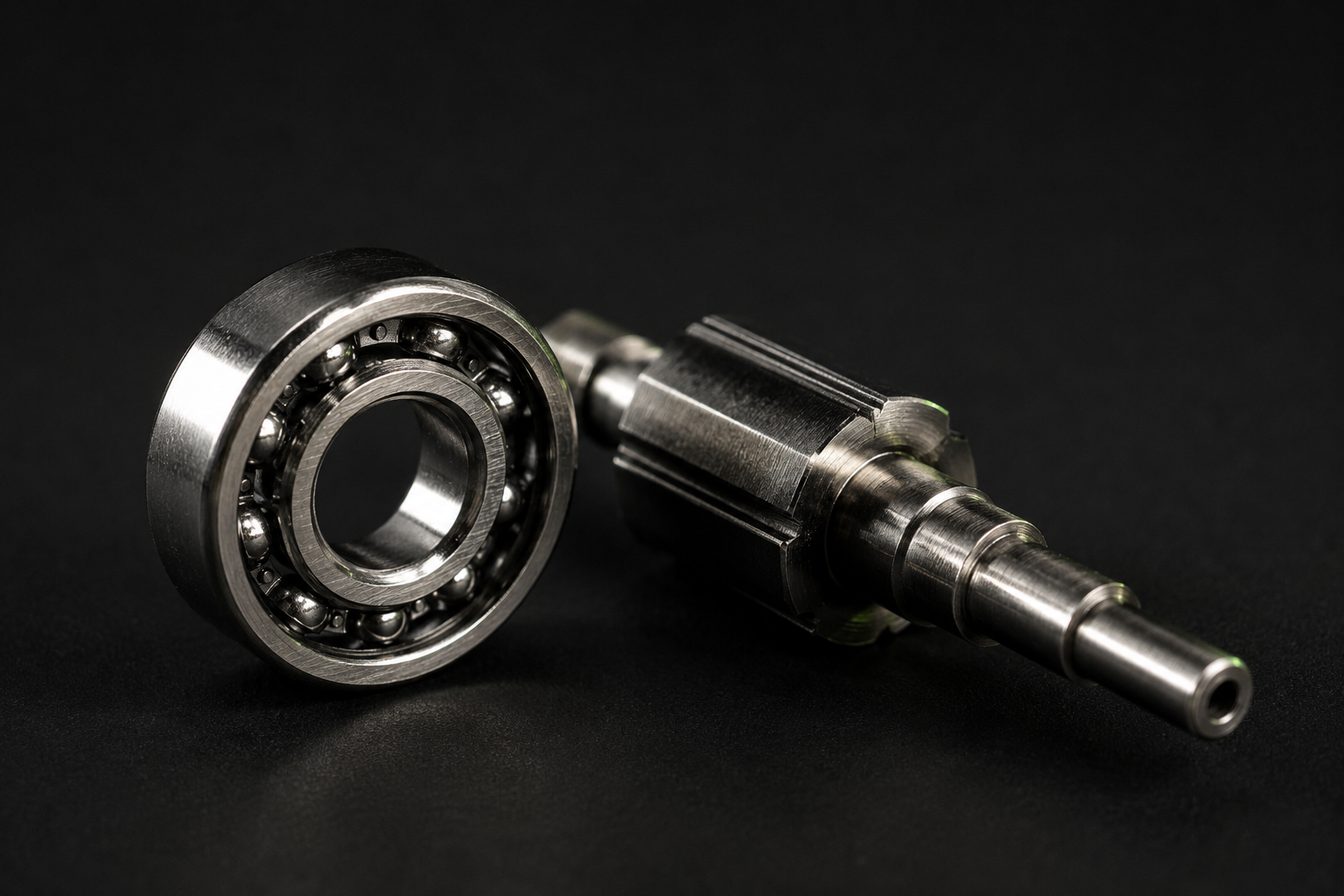
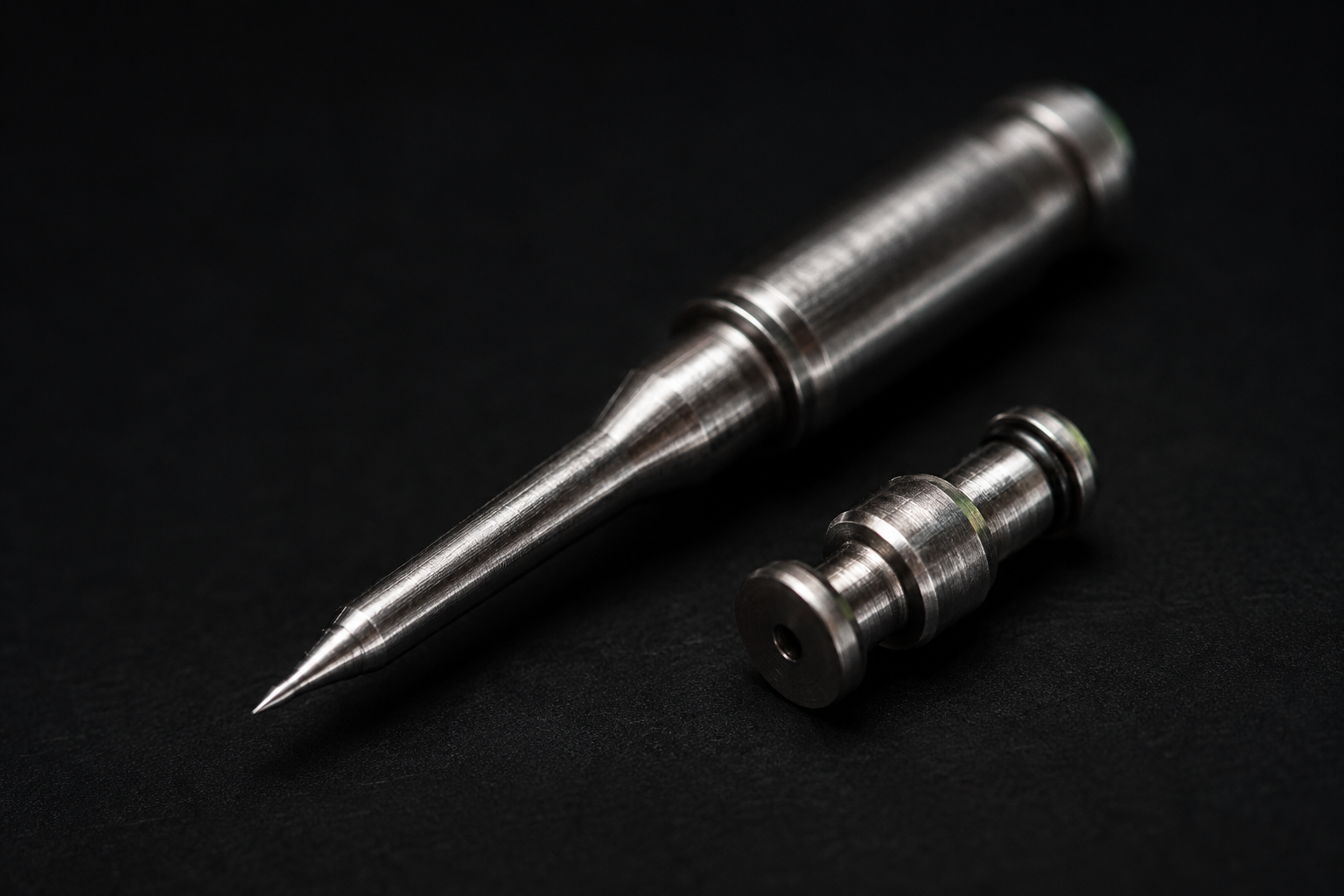
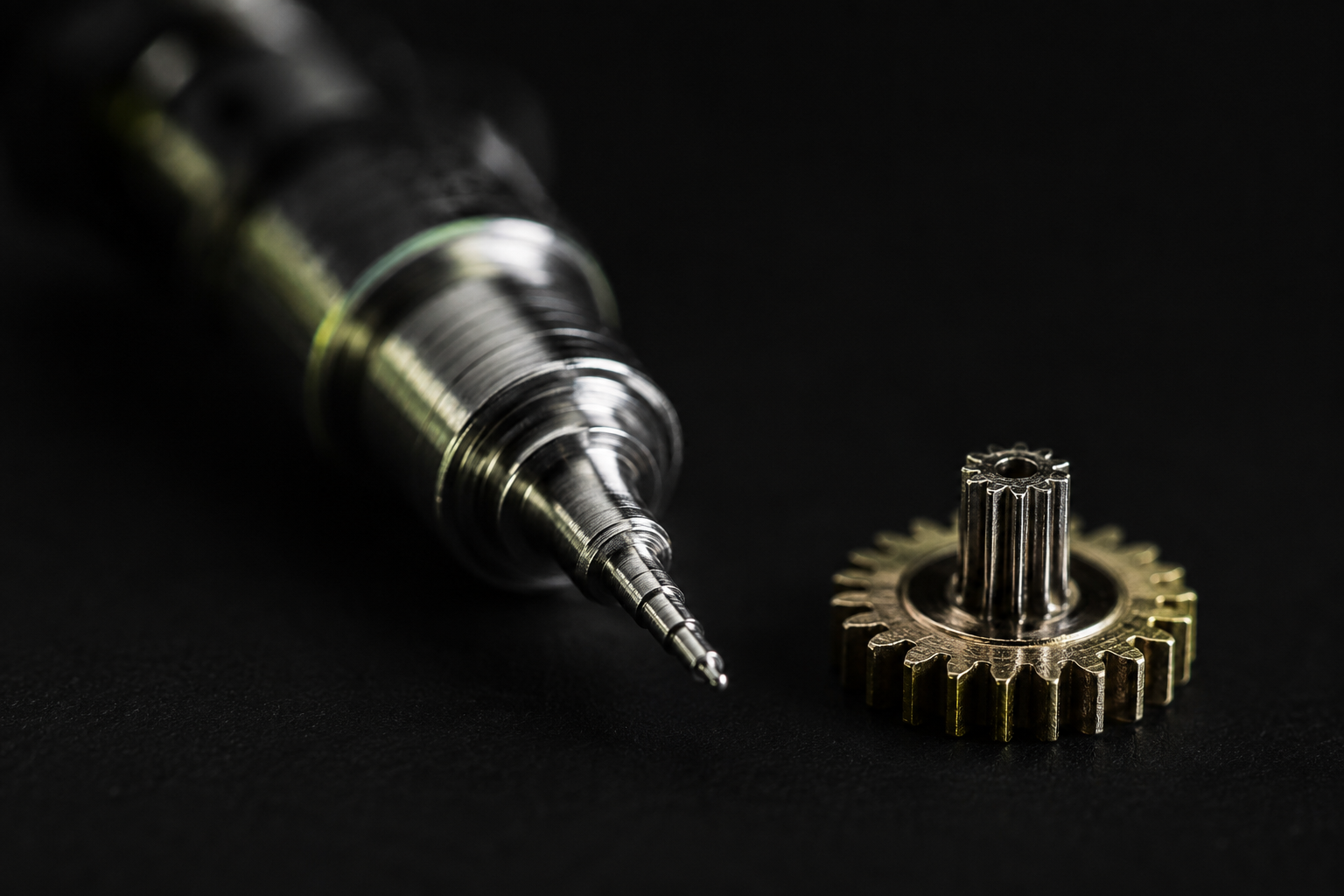
Shiny tiny parts safely inspected — all around.

Three requirements that are almost impossible to maintain manually over an entire shift — and which we manage to combine in one cycle per part.

01 · Precision

Precision in series production

360° scanning in 2D and 3D in one cycle per part — the resolution remains below 10 µm. Highest accuracy without slowing down the production cycle.

The challenge

Detecting a defect of just a few micrometers with absolute certainty — and doing so for eight hours in continuous operation.

02 · Reflections

Reflection safely separated

All-around detection from defined angles; the AI ​​separates real defects from reflections — for a reliable evaluation with low pseudo-error and slip rates.

The challenge

Polished, curved surfaces reflect light: highlights hide defects, scattered light creates pseudo-defects.

03 · Regulations

100% tested & traceable

100% inline, one result per part — documented and exportable for traceability. Even in highly regulated industries.

The challenge

In regulated industries, a sample is not sufficient: Every part must be demonstrably tested.

REFERENCE

Tested for regulated medical technology.

"Every part is thoroughly inspected, from every angle and in the smallest space — with a multitude of interconnected sensors. That's precisely what makes the difference for us."

< 10 µm
Defect detection
2D+3D+AI
360° inspection
100 %
inline tested
< 20 mm
Diameter & Height

Confidential. All images are anonymized. Customer name, product name, and component geometry are subject to a confidentiality agreement and will not be shown.

Does this fit your part?

Included in the scope — and what is deliberately excluded.

The system is built for a clearly defined testing task. This allows you to determine within one minute whether your part qualifies:

Within the scope

  • Small bodies of revolution — diameter and height up to approx. 20 mm
  • Surface defects from < 10 µm: scratches, grooves, pores, inclusions
  • Dimensional and geometric inspection in 2D and 3D
  • Shiny, polished and curved surfaces
  • 100% inline inspection with result and document per part

Not in scope

  • Large components outside the diameter and height class
  • High-speed bulk material transport in fractions of a second
  • Pure software or AI projects without equipment
  • Internal cavity or CT scan
  • Pure handling without testing order

Inspection process

Six steps to your inspection report.

Step / 01

Supply

Parts are fed in — individually and precisely positioned as desired, without them always having to be in the same place.

Step / 02

360° capture

The part is photographed from all relevant angles from all sides — with one camera, in the smallest possible space.

Step / 03

3D surveying

Geometry and dimensions are captured in 3D — for shape, height and position of features.

Step / 04

AI Assessment

The assessment separates genuine defects from reflections and assigns each finding to a class.

Step / 05

Sorting

Good and bad parts are separated based on the test results — without manual intervention.

Step / 06

documentation

Each part produces a traceable result — exportable for traceability and auditing.

Inquire now

Send us your component. We will test it.

Request a trial test now. With your own components and a subsequent professional test report.

What can I expect?
  • Sensor configuration — find out which technologies are suitable for your application
  • Cost estimate — find out early whether and when an automated inspection is worthwhile.
  • Anonymized pilot data from a sample measurement at the Aachen technical center